
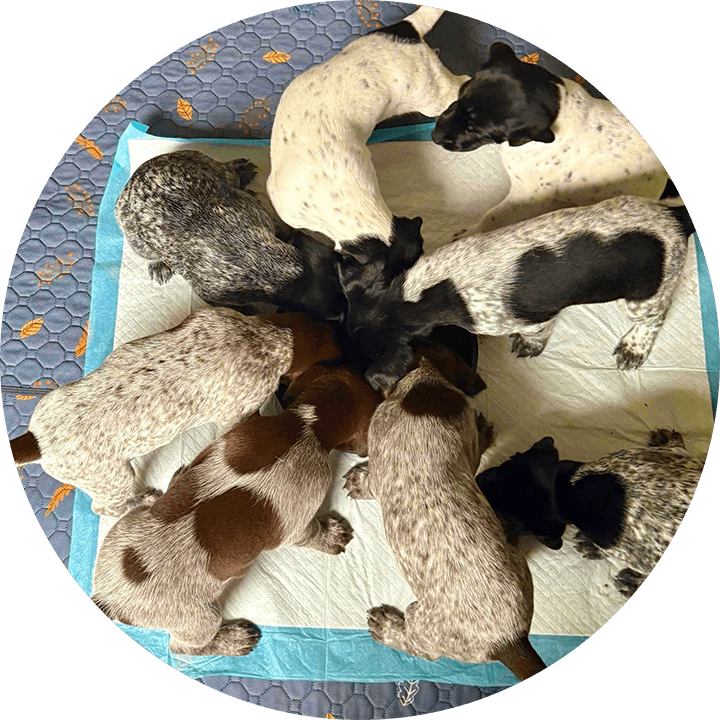
Comprehensive Breeding, Pregnancy, and Fertility Care for Dogs and Cats
TL;DR (Too Long; Didn’t Read)
Veterinary reproductive services help ensure safe, healthy, and well-managed breeding for dogs and cats. Services include:
- Breeding soundness exams
- Semen evaluation and freezing
- Ovulation timing
- Artificial insemination (fresh, chilled, frozen)
- Pregnancy monitoring (ultrasound and X-rays)
- Whelping support and C-sections
- Infertility evaluation
When provided responsibly and under medical supervision, reproductive care protects the mother, improves litter outcomes, and supports long-term health.
ELI5 (Explain Like I’m 5)
Breeding pets safely isn’t just putting a boy and a girl together. The vet checks that both animals are healthy, determines the optimal time to breed, helps if they need special techniques, monitors the pregnancy, and ensures mom and babies stay safe during delivery. It’s about planning, safety, and keeping puppies or kittens healthy.
Introduction
Breeding dogs or cats is a serious responsibility. It involves far more than timing two animals together. Responsible breeding requires:
- Health screening
- Genetic awareness
- Hormone testing
- Pregnancy monitoring
- Delivery planning
- Emergency readiness
At Southern Ocean Animal Hospital, reproductive services focus on controlled, ethical, medically guided breeding that prioritizes the health of the mother and offspring.
Whether you are an experienced breeder or considering your first planned litter, this guide explains how veterinarians evaluate and manage reproductive care from start to finish.
Key Ideas at a Glance
- 🐶 Breeding should always be medically supervised
- 🩺 Pre-breeding exams reduce risks
- 🧪 Hormone timing improves success rates
- ❄️ Semen can be evaluated and frozen
- 🤰 Pregnancy monitoring prevents emergencies
- 🏥 Planned C-sections save lives in high-risk breeds
Step 1: Breeding Soundness Exams
Before breeding, both the male and female should undergo a full evaluation.
For Females (Dams)
- Complete physical exam
- Vaginal exam
- Uterine health evaluation
- Infectious disease screening
- Genetic testing (breed-specific)
For Males (Sires)
- Physical exam
- Testicular exam
- Semen collection and evaluation
- Screening for inherited conditions
Breeds more likely to need careful screening:
Dogs:
- Bulldogs
- French Bulldogs
- Boxers
- German Shepherds
- Golden Retrievers
Cats:
- Persians
- Maine Coons
- Ragdolls
- Bengals
Step 2: Ovulation Timing
Timing is critical.
Dogs do not ovulate the same day they begin bleeding. Ovulation often occurs several days later.
Veterinarians use:
- Progesterone blood testing
- Vaginal cytology
- Behavioral signs
This improves:
- Conception rates
- Litter size
- Breeding efficiency
Step 3: Semen Evaluation & Cryopreservation
Semen Evaluation
Checks for:
- Sperm count
- Movement (motility)
- Shape (morphology)
Poor semen quality may require:
- Medical treatment
- Timing adjustments
- Artificial insemination
Cryopreservation (Freezing Semen)
Used when:
- Shipping semen long distance
- Preserving genetics
- Breeding at a later date
Frozen semen requires precise ovulation timing.
Artificial Insemination (AI)
AI may be done with:
| Type | When Used |
|---|---|
| Fresh | Same-day breeding |
| Chilled | Shipped semen |
| Frozen | Stored genetics |
AI improves breeding success when:
- Distance is involved
- Natural breeding is unsafe
- Male or female has difficulty
Step 4: Pregnancy Diagnosis
Pregnancy can be confirmed by:
Ultrasound (Around Day 25–30)
- Detects heartbeat
- Confirms viability
- Estimates litter size (roughly)
X-rays (After Day 45)
- Counts skulls
- Evaluates fetal size
- Plans for delivery
Managing Pregnancy
During pregnancy, vets monitor:
- Weight gain
- Nutrition
- Parasite control
- Infection prevention
High-risk breeds for delivery complications:
Dogs:
- English Bulldogs
- French Bulldogs
- Boston Terriers
- Pugs
These breeds often require scheduled C-sections.
Whelping (Delivery) Assistance
Normal labor includes:
- Nesting behavior
- Drop in temperature
- Active contractions
- Puppy delivery
Emergency signs:
- Strong contractions >30 minutes with no puppy
- Green discharge before first puppy
- Extreme exhaustion
Cesarean Sections (C-Sections)
Planned C-sections are common in brachycephalic breeds.
Emergency C-sections may be needed if:
- Puppy stuck
- Fetal distress
- Uterine inertia
Veterinarians ensure:
- Safe anesthesia
- Neonatal resuscitation
- Post-surgical recovery
Infertility Solutions
Common causes:
Females:
- Hormonal imbalance
- Uterine infection
- Poor timing
Males:
- Low sperm count
- Infection
- Age-related decline
Diagnostics may include:
- Hormone panels
- Ultrasound
- Semen testing
Dogs vs. Cats
| Feature | Dogs | Cats |
|---|---|---|
| Heat cycle frequency | 1–2 times per year | Seasonally polyestrous |
| AI common? | Yes | Less common |
| C-sections common? | Certain breeds | Rare |
| Litter size | 4–8 average | 3–6 average |
Cats are induced ovulators, meaning mating triggers ovulation.
Timeline Overview
| Stage | Approximate Time |
|---|---|
| Ovulation | Day 5–15 of heat |
| Pregnancy length (dogs) | ~63 days |
| Pregnancy length (cats) | ~63–65 days |
| Ultrasound | Day 25–30 |
| X-ray | Day 45+ |
Dr. Dan’s Approach
Dr. Dan emphasizes:
- Ethical breeding practices
- Health screening before mating
- Clear communication
- Planning for delivery
- Emergency preparedness
The goal is always:
- Healthy mother
- Healthy litter
- Responsible breeding decisions
Example Scenario
A French Bulldog owner plans to breed. Pre-breeding exam is normal. Progesterone testing was performed to determine the optimal breeding day, using chilled semen. Pregnancy confirmed by ultrasound at 28 days. Scheduled C-section at day 62 ensures safe delivery of four healthy puppies.
Planning prevented emergency complications.
Summary
Veterinary reproductive services provide structured, safe, and medically guided breeding. From pre-breeding health exams to pregnancy monitoring and delivery assistance, these services protect both mother and offspring.
Breeding should never be rushed or unmanaged. Proper veterinary care dramatically improves outcomes and reduces risks.
Schedule an Appointment
If you are considering breeding your dog or cat:
📞 Contact Southern Ocean Animal Hospital to schedule a reproductive consultation.
We will guide you through:
- Pre-breeding exams
- Ovulation timing
- Artificial insemination
- Pregnancy monitoring
- Delivery planning
Healthy litters start with careful planning.
Glossary
Ovulation – Release of eggs
Progesterone – Hormone used to time breeding
Cryopreservation – Freezing semen for future use
Artificial insemination (AI) – Manually placing semen
Whelping – Giving birth (dogs)
C-section – Surgical delivery
Brachycephalic – Short-nosed breeds